Blog
How to learn vocabulary in context instead of collecting word lists
A vocabulary list can be useful for a quick check, but a translation alone leaves questions unanswered. Which words go together? What situation calls for the expression? How would you use it in your own sentence? Context gives you material for answering those questions.
Start with something you want to understand
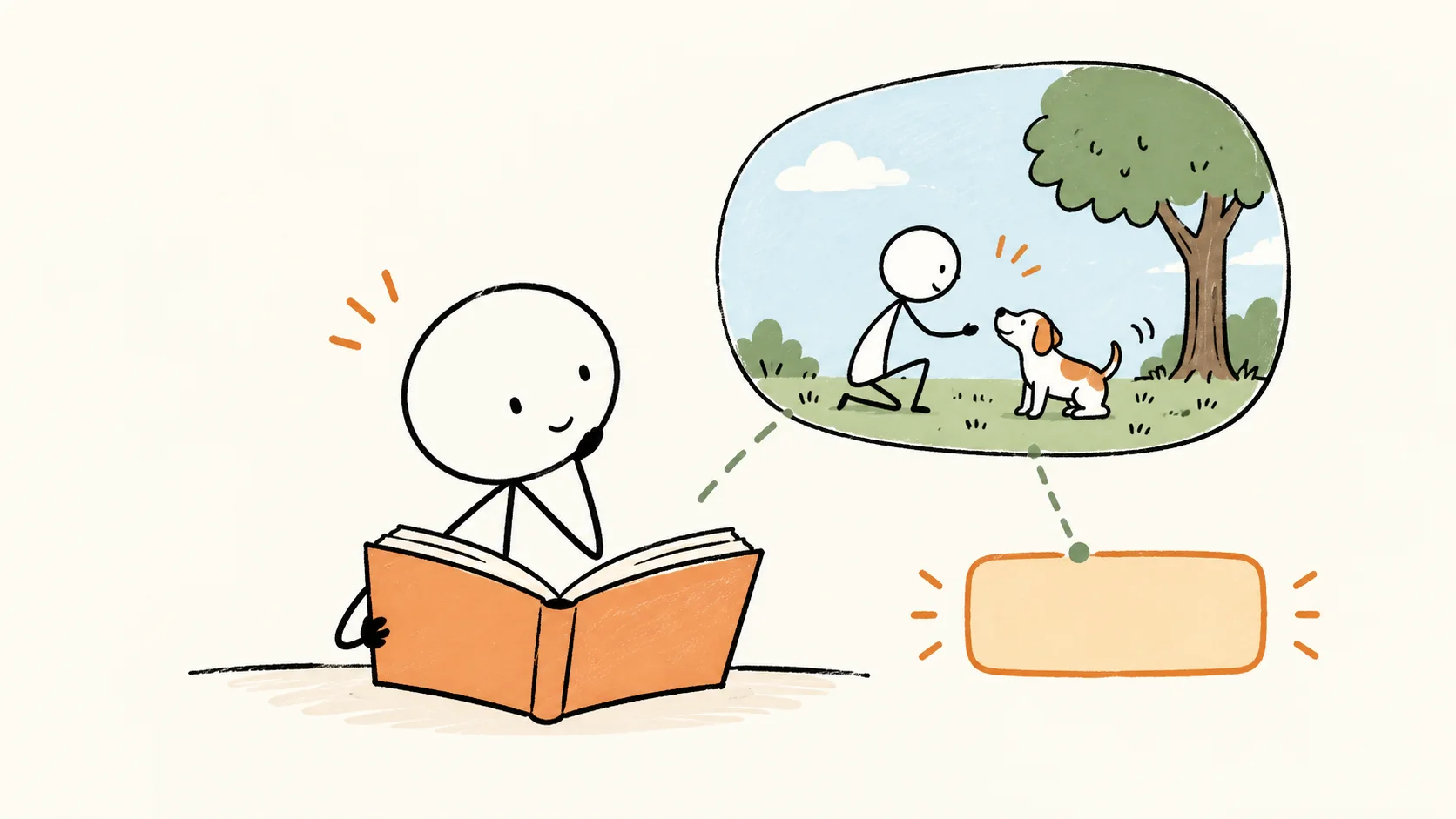
Choose a short scene, article or video that interests you and is manageable at your current level. First establish what happens. Avoid turning the first reading into a hunt for every unfamiliar word: you may miss the message while building a list.
On a second pass, choose expressions that help explain the scene or are relevant to your own life. A word you understand from context may not need immediate lookup. A familiar word used in a new phrase may deserve more attention.
Keep the phrase that carries the meaning
Record more than the headword. With English, this may be a collocation such as “keep an eye on”. With German, it may include an article or a preposition. The original sentence shows the expression doing a real job.
Passengers should keep an eye on their belongings on public transport.Use a small recall task
Close the explanation and describe the scene. Can you recover the expression? Then write a new sentence. Recognition while reading and producing a sentence are different tasks, so practise both.
If you struggle, reopen the original context. Check whether the problem is the meaning, the wording or a grammatical pattern. Review that specific problem rather than repeating an entire list without a clear purpose.
Connect stories to later review
In Lexiego, you can read illustrated stories, listen to audio and inspect a word in context. Save selected vocabulary and return to its sentence during review. This supports a learning process; it does not guarantee a particular number of new words or a fluency deadline.
- Understand one short scene.
- Choose a useful phrase and check its meaning.
- Create an original sentence.
- Review later, then look for the phrase in another context.