Learning guide
Learn English with short stories you can read and hear
A story gives vocabulary a setting: someone wants something, a problem appears and an event changes the situation. Those connections make a sentence easier to discuss and revisit.
What makes a story useful for learning?
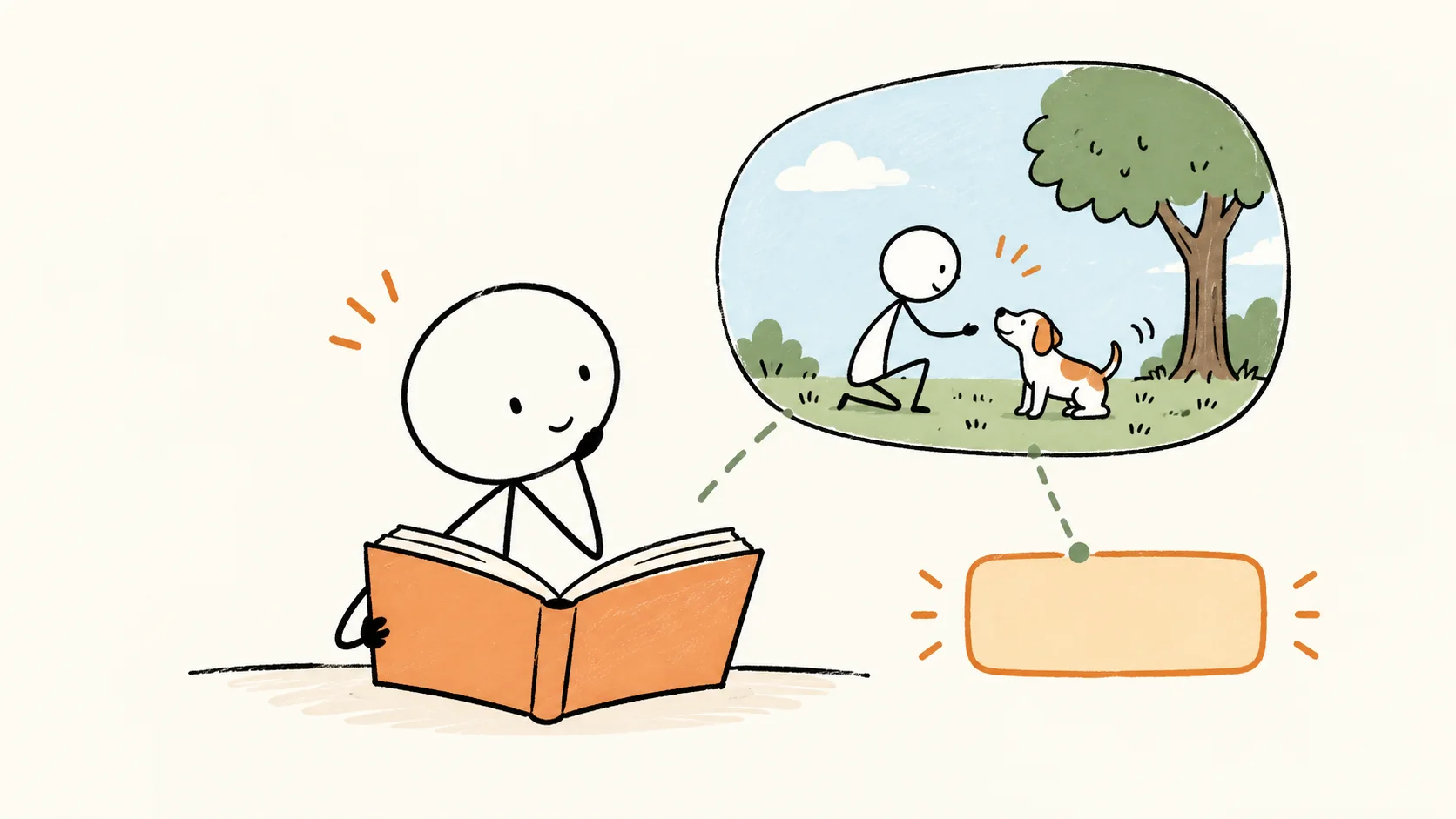
Choose a scene you can follow without translating every sentence. An illustration can help establish the setting, but use the text to check what actually happens. Short does not automatically mean easy: sentence structure and unfamiliar expressions matter too.
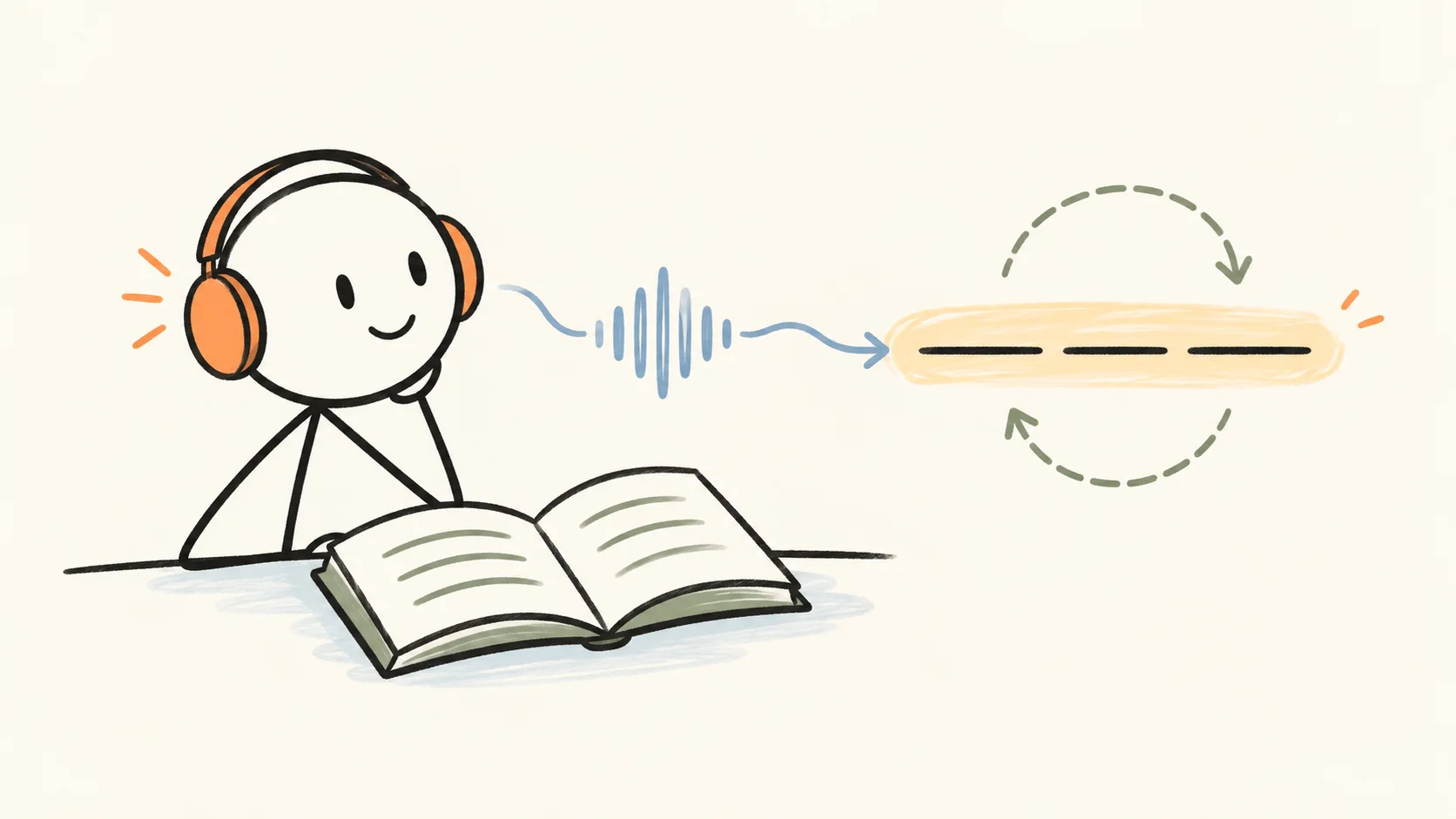
In Lexiego, illustrated stories and audio let you return to the same scene through reading and listening. A word meaning can help you continue, while saved vocabulary gives you a reason to revisit the sentence later.
Work with the story before collecting words
Ask who is involved, what happens and why. Then choose a phrase that helps explain the event. This makes your vocabulary selection serve understanding rather than interrupt it.
Maya found a wallet on the bus. Instead of keeping it, she handed it to the driver.Try a three-pass story session
The aim is not to memorise the whole story. Keep one useful expression and check that you can understand the event again without relying on the translation.
- Read for the main event without stopping at every word.
- Listen while following the text; pause at one difficult phrase.
- Explain the ending in your own words and save a useful expression.
- Return later and test whether the expression still makes sense in its original sentence.