Blog
How to combine reading and listening without depending on the text
Understanding a written sentence does not always mean you will recognise it when spoken. Audio brings rhythm, connected sounds and timing. Reading can help you inspect those details, as long as you eventually give your ears a task of their own.
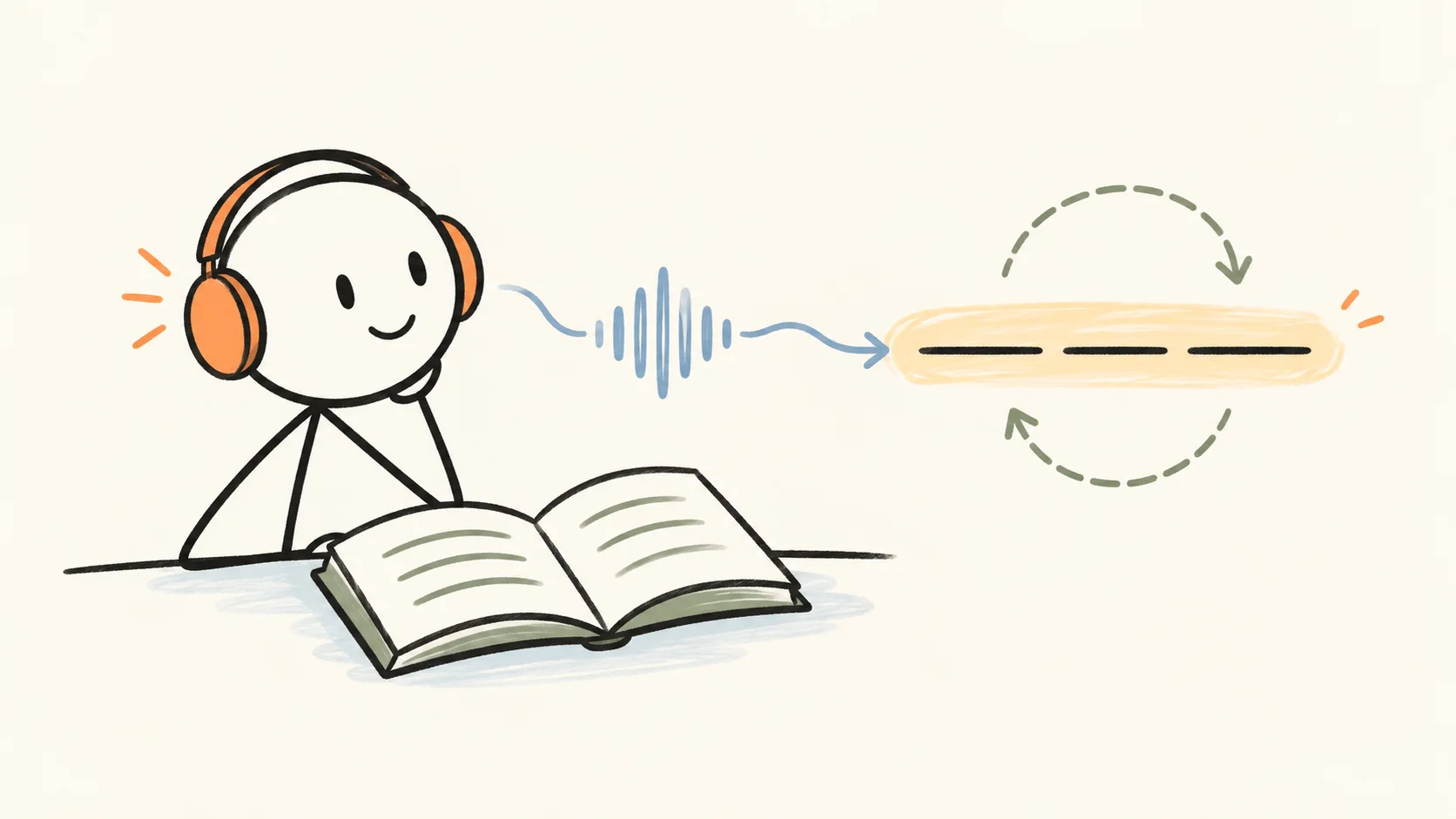
Listen once for the overall situation
Choose a short passage where you can identify the setting and the main event. On the first listen, do not aim to catch every detail. Ask a simple question, such as who is speaking or what went wrong.
If the whole passage is unclear, choose easier material rather than replaying something you cannot yet interpret. If only one phrase is difficult, keep working with that phrase instead of changing the entire session.
Use the written sentence to investigate
Read the difficult part and check the meaning of important words. Then listen while following that sentence. Notice which words seem grouped together and where the speaker pauses.
I was going to call you, but my phone ran out of battery.Replay with less support
After inspecting the sentence, listen again before looking at the text. Can you now identify the phrase and its purpose? Describe the message rather than trying to reproduce every syllable.
A replay is most useful when you know what you are checking. Simply running audio in the background may feel familiar without showing whether you understand it. Keep the task short and specific.
Finish with a meaning check
Lexiego stories bring reading and audio into the same scene. Use the text to resolve a difficulty, then test your listening separately. This can complement videos, conversation and other listening material.
- Listen and name the main event.
- Inspect one difficult sentence in writing.
- Listen again with less reliance on the text.
- Explain the message and revisit the phrase in a later session.