Blog
A short language learning routine for busy days
A busy day can make an open-ended study plan difficult to start. A smaller task helps when it has a clear purpose and an obvious finish: understand one scene, practise one phrase and return to it later.
Choose the task before opening the feed
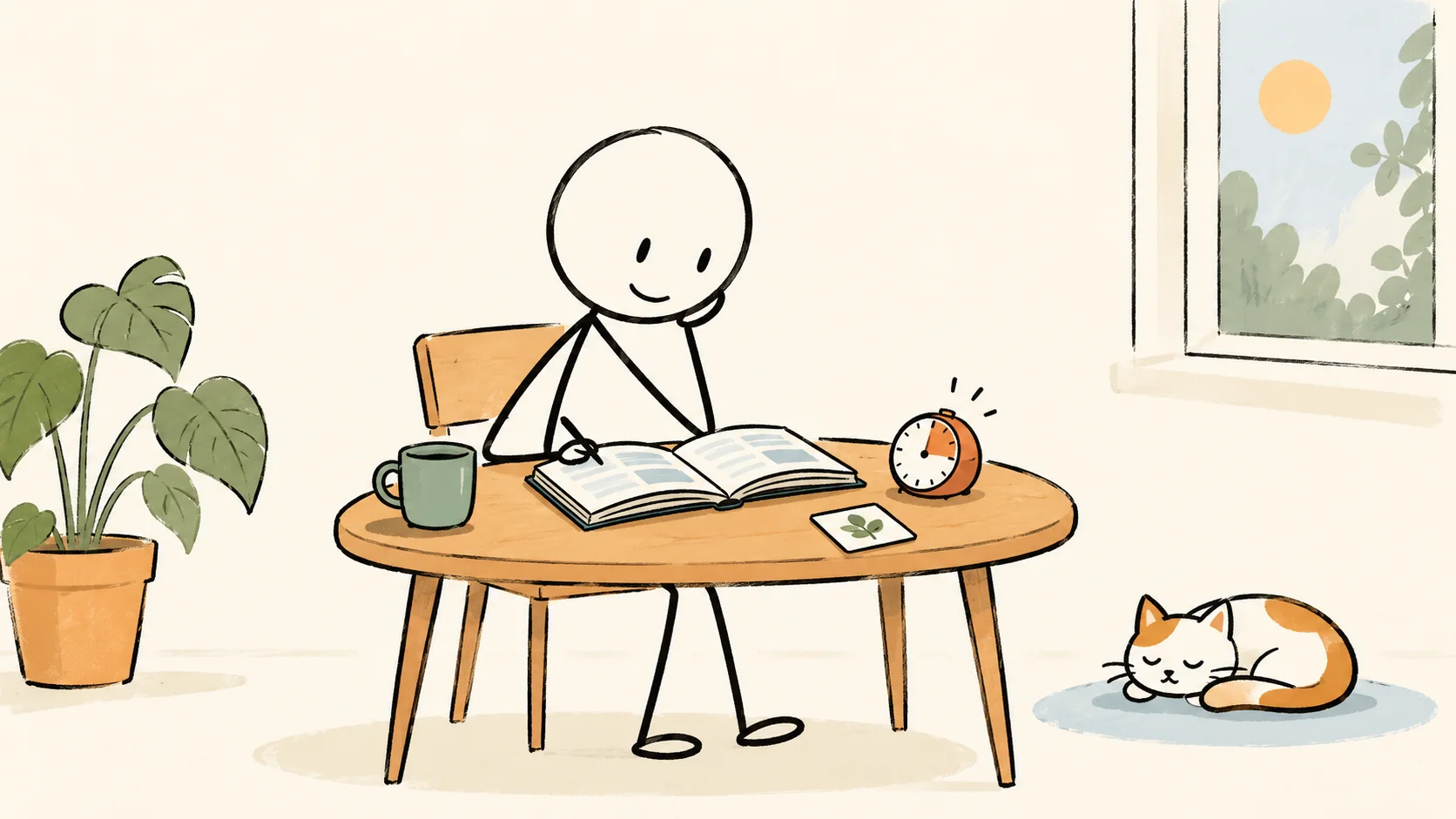
“Study English” is too broad to tell you when you are done. “Read one short story and explain its ending” gives you a task you can complete. Decide what you will do before browsing so that choosing content does not become the whole session.
Keep a fallback task for days when a normal session is impractical. It might be reviewing one saved sentence rather than starting new material. The fallback supports continuity; it is not a promise that a tiny session covers every language skill.
Work with a single useful expression
Pick a phrase that serves the story or your own situation. Do one small action with it rather than collecting several translations.
I nearly missed the bus this morning.Attach the session to a realistic moment
Choose a moment when you can pay attention safely: a break, a quiet commute as a passenger or time after a meal. Match the activity to the setting. Reading can work when sound is unavailable; listening needs an environment where you can hear.
If you miss a day, continue with the next practical task. Do not turn missed sessions into a growing debt. When you have more time, add speaking, writing or longer reading instead of treating the small routine as your complete study plan.
Leave a useful starting point for next time
Lexiego lets you explore short stories and revisit saved vocabulary. Finish by selecting what you will check later: the sentence, its meaning or a phrase you want to reuse.
- Read one scene for meaning.
- Practise one relevant expression.
- Save it with its context.
- Begin the next session by recalling it before checking the answer.