Blog
From B1 toward B2 English: a routine for deeper understanding
When familiar English exercises feel easy but unfamiliar texts still feel difficult, repeating the same task may not show what needs work. Use a slightly more demanding passage to identify whether the obstacle is vocabulary, structure or explaining an idea.

Identify the kind of difficulty
Read a short passage and summarise it. If you recognise the words but miss the argument, look at connectors and sentence relationships. If a few expressions block the message, investigate those phrases. If you understand but cannot summarise, add an output task.
B1 and B2 describe broader language abilities, not a count of completed stories. Progress can differ across reading, listening, speaking and writing. Use more than one type of task to evaluate your study needs.
Move from the event to its reason
After identifying what happened, explain why and compare alternatives. This gives familiar vocabulary a more demanding task without requiring an entirely new topic.
The city added evening buses because many employees finished work after the last service.Pair input with a small output task
Use a story or article as input, then write a summary, retell the scene or express an opinion with a reason. Compare your wording with the original and notice phrases you could reuse.
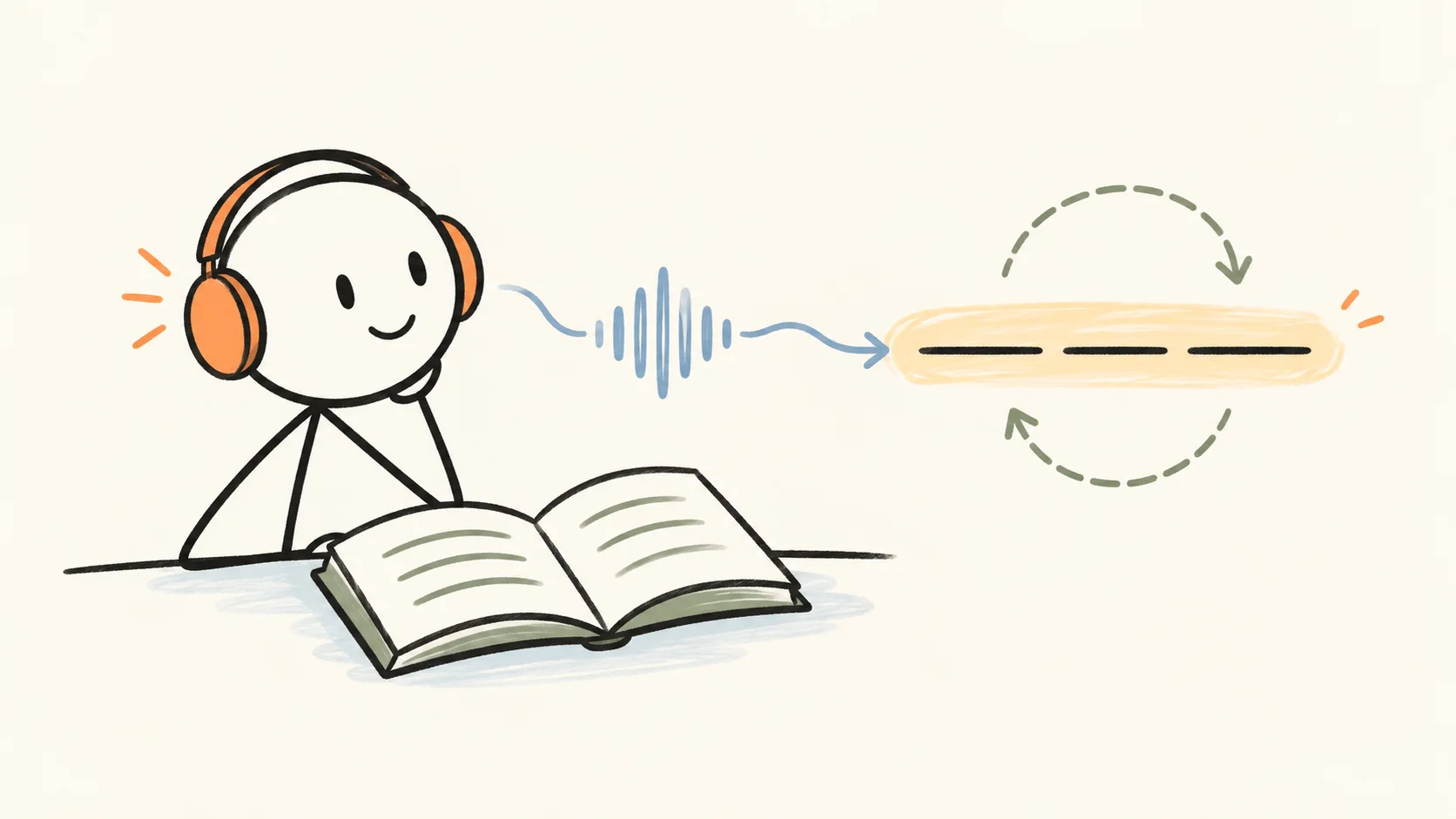
For listening, return to an understandable passage without looking at every line. For writing and speaking, seek feedback on patterns you repeatedly find difficult. An app-based reading routine supports these tasks but does not replace them.
Make the next session follow the last one
Lexiego offers reading, audio, vocabulary review and C-Test-style practice. Choose the next task based on a difficulty you actually observed, not just a desire to select a higher level.
- Read and summarise a manageable but challenging passage.
- Identify one specific obstacle.
- Practise a relevant phrase or pattern.
- Return to the passage and compare your understanding.